Why Industrial Cooling Must Become Water-Responsible
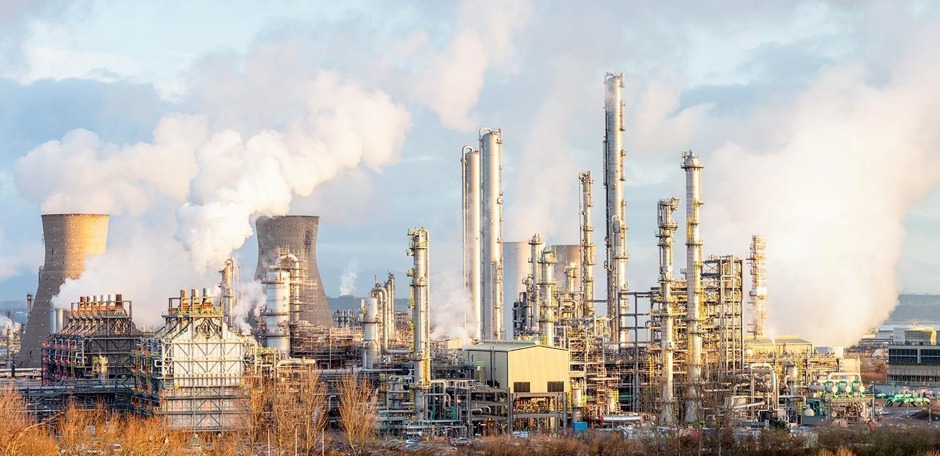
I have always found something fundamentally troubling about conventional cooling towers.
A cooling tower represents a strange industrial contradiction: we spend electrical energy to reject thermal energy, and at the same time we lose valuable water while doing so. Energy is consumed merely to dispose of other energy, while freshwater is continuously evaporated into the atmosphere.
The cooling tower may be technically effective, but from the perspective of resource conservation it represents a double loss—energy rejected and water sacrificed.
Key takeaway
Industrial cooling should no longer be designed only for thermal performance. Water consumption must become a primary design parameter.
There Are No Permanently Water-Abundant Regions
We often distinguish between water-stressed regions and water-abundant regions. But such a distinction can be misleading.
A region may appear water-abundant today because it receives sufficient rainfall, has access to rivers or possesses usable groundwater reserves. However, water availability is never permanent. Population growth, industrialisation, pollution, groundwater depletion, urban expansion and changing rainfall patterns can rapidly transform an apparently water-rich region into a water-scarce one.
What appears abundant today may become unavailable tomorrow.
Industries designed today may continue operating for twenty, thirty or even fifty years. It is therefore risky to select water-intensive systems based only on present-day availability without considering future conditions.
“There may be no permanently water-abundant regions—only regions that have not yet experienced serious scarcity.”
We Must Not Become Borrowers from the Future
When an industry consumes water inefficiently, the impact does not stop with the present generation. It transfers part of the burden to those who will live after us.
Water is not just a utility bill
Paying for water covers extraction, treatment, pumping and distribution. It does not fully compensate society for:
- aquifer depletion,
- ecological damage,
- evaporation losses,
- and reduced future water availability.
Payment provides access to a resource; it does not provide the right to waste it.
Conventional Cooling Towers Should Not Be the Default
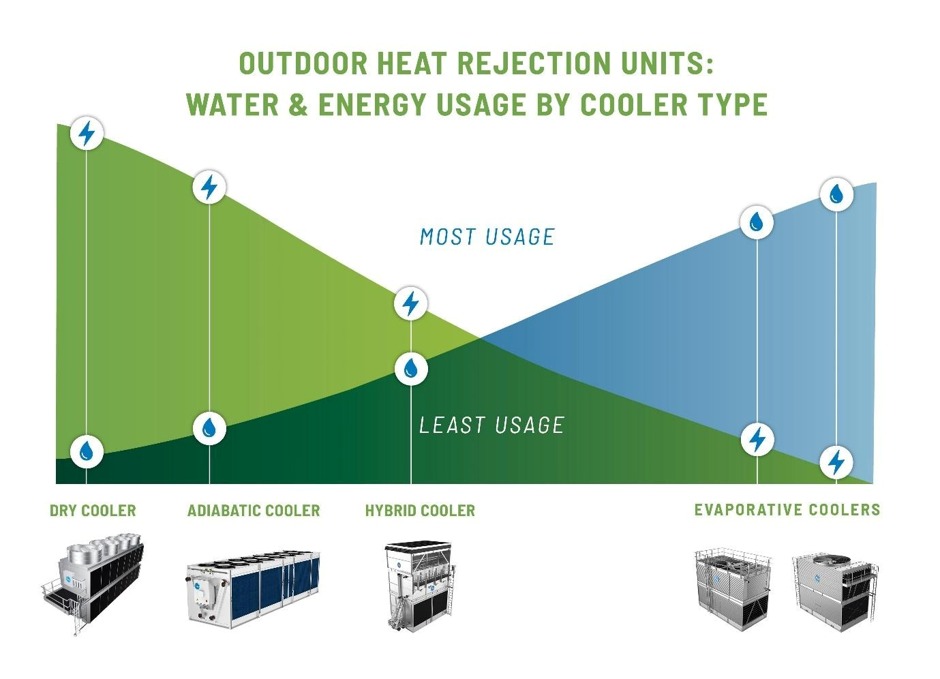
Before deciding to reject heat through evaporation, industries should ask whether that heat can be reduced, recovered or reused.
Preferred engineering hierarchy
- Reduce heat generation
- Recover useful heat
- Reuse cooling water
- Evaluate dry cooling
- Evaluate adiabatic or hybrid cooling
- Use evaporative cooling only for the unavoidable balance
Recovered heat may be useful for process heating, hot-water generation, drying, preheating or absorption cooling.
Why Adiabatic Cooling Deserves More Attention
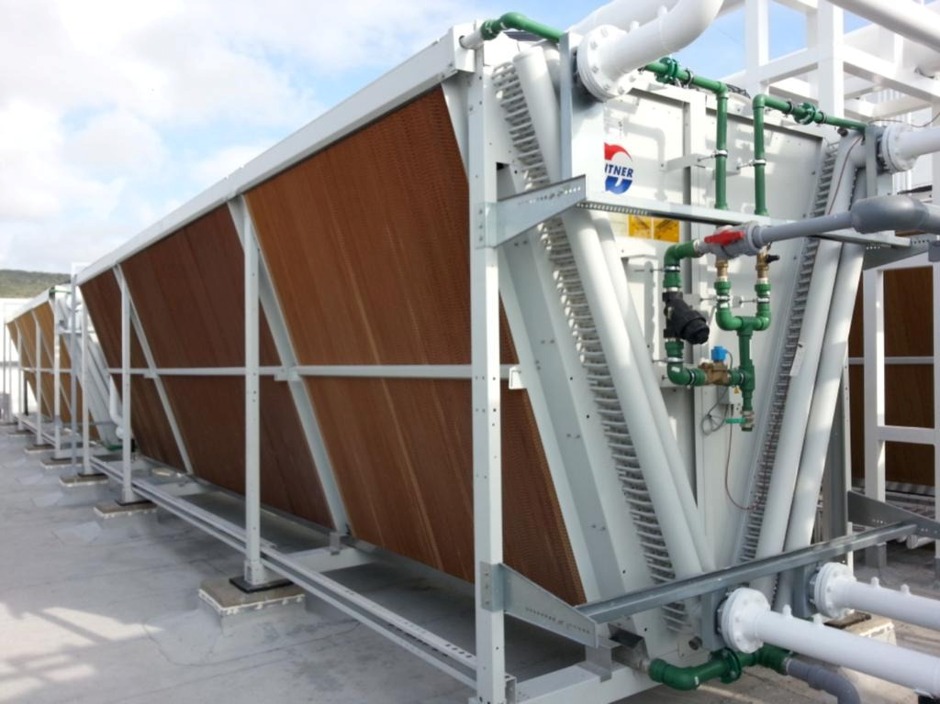
Adiabatic coolers generally operate as dry coolers during favourable ambient conditions and use limited evaporative assistance only during hotter periods. Compared with conventional cooling towers, they can significantly reduce:
- continuous evaporation,
- blowdown,
- chemical treatment,
- and freshwater makeup.
They may not suit every process temperature, but they should become a preferred option for evaluation, particularly for small and medium industries.
“Industries should be required to demonstrate why dry, adiabatic or hybrid cooling is not feasible before conventional cooling towers are accepted as the default solution.”
The Energy Argument Needs a Broader View
A common objection is that dry or adiabatic systems may require larger heat-transfer surfaces, bigger fans or somewhat higher electrical power.
That argument is technically valid, but it is incomplete.
The additional electricity must be compared with the quantity of freshwater permanently saved. Electricity can increasingly be generated from renewable sources, whereas water lost through evaporation cannot easily be replaced.
Where a reasonable increase in electrical consumption can prevent a substantial and continuous freshwater loss, the trade-off may be environmentally justified.
A useful comparison
| Resource | Can it increasingly be regenerated? |
| Electricity | Yes, through renewable energy |
| Evaporated freshwater | No, not easily or economically |
Water-Footprint Reduction Must Match Carbon-Footprint Reduction
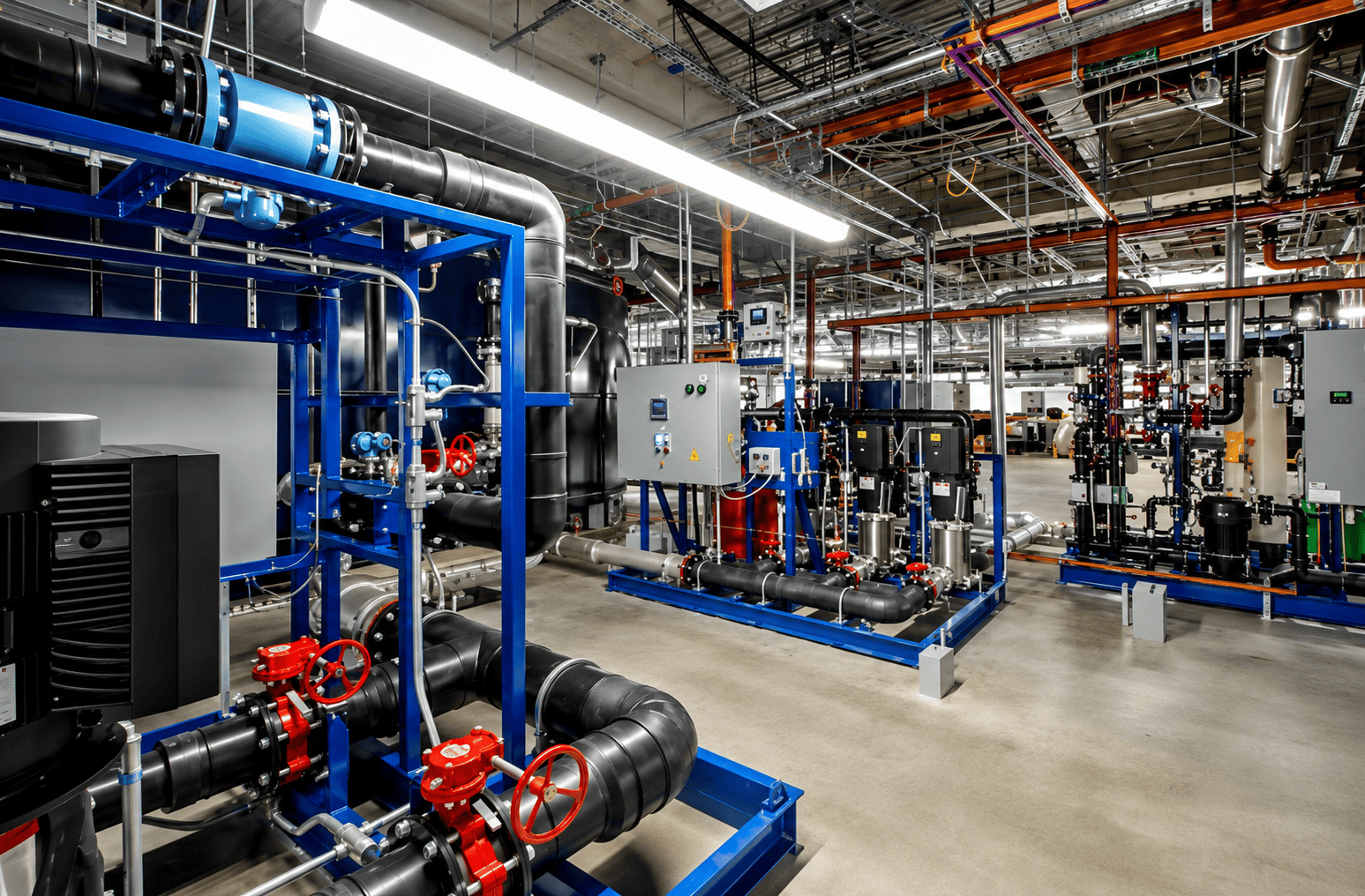
Large industries are now expected to reduce carbon emissions. Similar seriousness must be applied to water footprints.
Every major industrial facility should maintain a measurable, time-bound water-footprint reduction roadmap covering:
- freshwater withdrawal,
- cooling-tower evaporation and blowdown,
- water consumed per unit of production,
- recycled water use,
- condensate recovery,
- heat-recovery opportunities,
- and future water-availability risks.
The next industrial transition should not only be from fossil energy to clean energy; it must also be from water-intensive production to water-responsible production.
Smaller Industries Need Practical Support
Water-efficiency innovation should not remain limited to large corporations. Small and medium industries often lack dedicated research teams, pilot facilities and audit budgets.
Support mechanisms could include:
- subsidised water audits,
- grants for low-water cooling technologies,
- shared testing facilities,
- demonstration plants,
- compact adiabatic cooling packages,
- low-cost monitoring instruments,
- and financial assistance for retrofits.
A genuine industrial water transition will occur only when innovation reaches the smallest factory, not merely the largest corporation.
Should Taxation Reflect Water Footprint?
Industrial taxation currently focuses mainly on economic activity, not on long-term water impact.
A more responsible framework could consider:
- freshwater permanently consumed,
- groundwater dependence,
- evaporation losses,
- water consumed per unit of production,
- recycling performance,
- and adoption of low-water cooling technologies.
Industries using treated sewage, recovered condensate, recycled process water or dry/adiabatic cooling could receive incentives.
A Necessary Industrial Transition
Cooling towers will continue to be necessary in some applications. The objective is not to reject them blindly, but to stop treating continuous freshwater evaporation as an unquestionable industrial practice.
Every project should ask:
- Can the heat be avoided?
- Can it be recovered?
- Can dry cooling be used?
- Can an adiabatic or hybrid system reduce water demand?
- Can treated wastewater replace freshwater?
- Can blowdown be reduced and recovery increased?
Only after answering these questions should conventional evaporative cooling be selected.
Final Thought
Industrial development should not create a hidden water liability for the future.
We must not leave future generations with depleted aquifers, polluted rivers and water-intensive factories simply because water appeared affordable during our time.
“We should not cool today’s industries by heating tomorrow’s water crisis.”
Ganeshkumar M
Partner | Dos Peepal Solutions LLP